
- Details
ERCIM hosted the AIOTI Workshop on Semantic Interoperability for Digital Twins from 5–6 February in Sophia Antipolis, France, gathering around 50 experts. The workshop focused on advancing semantic interoperability and laying the groundwork for next-generation information systems by addressing real-world industrial challenges. It featured a mix of invited talks and community-submitted presentations that led to productive discussions. The slides and abstracts of most presentations are now available on the workshop web page, and a comprehensive public report will follow.
For more details, please visit the workshop web page
- Details
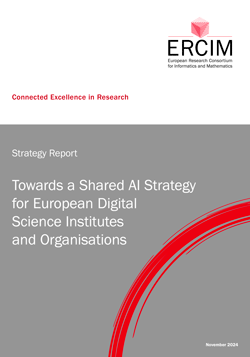 Generative AI (GenAI) and Large Language Models (LLMs) are transforming science and society, presenting significant opportunities alongside inherent challenges. European digital science institutes and organizations are well-positioned to contribute to responsible development and use of these technologies.
Report of the 12th International Workshop on Computational Intelligence for Multimedia Understanding
- Details
by Behçet Uğur Töreyin (İTÜ), Maria Trocan (ISEP) and Davide Moroni (CNR-ISTI)
Approximately forty researchers attended the International Workshop on Computational Intelligence for Multimedia Understanding (IWCIM), organized annually by the ERCIM Working Group Multimedia Understanding through Semantics, Computation and Learning (MUSCLE). The workshop took place as a satellite event of IEEE ISCAS 2024 held in Singapore on 21 May 2024.
- Details
by Maurice ter Beek (CNR-ISTI)
The yearly conference of the ERCIM Working Group on Formal Methods for Industrial Critical Systems, FMICS [L1], the key conference at the intersection of industrial applications and formal methods, reached its 29th edition. This year the participants met in Milan, Italy, during 9-11 September 2024.
- Details
Nicola's research is distinguished by its high quality, interdisciplinary approach, and significant impact. His work spans across multiple domains, including Artificial Intelligence, Computer Vision, Deep Learning, and Multimedia Information Retrieval. He has made substantial contributions to both the theoretical and applied aspects of these fields, with measurable scientific and practical outcomes.
- Details
 The EU-funded project TERMINET has worked on next-generation IoT across six realistic use cases, featuring software-defined networking, edge computing, virtualization, federated learning, augmented, and virtual reality interfaces. For TERMINET, ERCIM focused on standardization, as well as conducting research on moving beyond the limitations of current approaches to knowledge representation and reasoning.
For more information, see:
https://terminet-h2020.eu/towards-next-generation-iot/
https://ercim-news.ercim.eu/en136/r-i/terminet-pioneering-the-future-of-smart-interconnected-iot
- Details
We are pleased to share insights from the recent 4th Workshop jointly organized by ERCIM and the Japan Science and Technology Agency (JST), held in Kyoto, Japan, in October 2023. This workshop, themed “Exploring New Research Challenges and Collaborations in Artificial Intelligence, Big Data, Human-Computer Interaction, and the Internet of Things,” served as a dynamic platform for European and Japanese researchers to present their latest findings and discuss future collaborations.
Hosted by JST as part of the Advanced Integrated Intelligence Platform project, the event successfully fostered discussions on cutting-edge research and development in critical technological domains. Participants had the unique opportunity to explore potential partnerships within the framework of European Commission programs and corresponding initiatives by JST, setting the stage for innovative international collaborations in the fields of AI, Big Data, HCI, and IoT.
The full report is available here: https://ercim-news.ercim.eu/en136/jea/report-on-the-4th-joint-jst-ercim-workshop
- Details
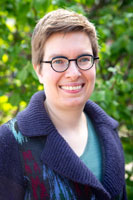
The ERCIM Selection Committee for the Cor Baayen Young Researcher Award unanimously selected Rianne de Heide, nominated by CWI, as the winner for 2023. An honorary mention is given to Denis Merigoux from Inria.
Dr. Rianne de Heide's research activity stands out for its quality and breadth. Her work covers a wide variety of topics within the general field of mathematical statistics, with focus on learning from data. In her work, Bayesian learning is used as a tool, sometimes critically evaluated, sometimes extended, always with a strong mathematical-theoretical component. Her work reaches breadth by (a) the aspects of learning from data/statistics that are studied: optional stopping, misspecification (statistics with incorrect but useful models), philosophical problems in induction, bandits, and (b) the scope across various other disciplines: philosophy and logic, psychology, and machine learning and AI.
- Details
- Details
The Institute of Software Engineering and Technology (ITIS, or ITIS Software) is a unit of the University of Malaga dedicated to scientific and technical research [L1]. The main objective of ITIS is to contribute to the development and application of software technologies through research, innovation, training, and technology transfer. Due to the transversal characteristics of software, the Institute is an interdisciplinary center in which specialists in different technological areas and application domains work together to advance these technologies.